




An Intergenerational Approach to Community with Dr. Imani Rashid


 By Helen McDonald
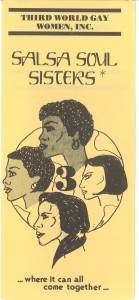
In her mid-30s, Dr. Imani Rashid found herself at a Salsa Soul Sisters, Third World Wimmin Inc. Collective (now called African Ancestral Lesbians United for Social Change or AALUSC) meeting, surrounded by radical lesbians of color. This was one of the first times she met other LGBTQ women who looked like her. It was around this time that she began identifying as a lesbian. Today, the self-identified elder lesbian butch is going on 75 and still remains dedicated to the initiatives and principles developed within the Salsa Soul Sisters collective.
Soon after Rashid had begun attending Salsa Soul Sisters meetings in the mid-1970s, she suggested to the group that lesbian and gay families celebrate Kwanzaa, a weeklong celebration that honors African-American culture and history. Although Kwanzaa was created by Maulana Karenga, a decidedly sexist and otherwise problematic Black nationalist, Rashid understood the value of the holiday to Black communities and assured that the principles are useful and applicable to all ages, genders, and socioeconomic classes. As LGBTQ people, “we naturally practice [principles like] kujichagulia and are aware of our own self-determination,” Rashid excitedly explains. She also believes that unity (umoja) and cooperative economics (ujamaa) help us to support each other in LGBTQ communities, spiritually and financially.
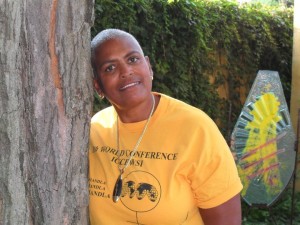
Imani Rashid
Even though Kwanzaa generally lasts for one week at the end of the calendar year, Rashid emphasizes that she commemorates the holiday 365 days of the year. Every two to three months, she holds Kwanzaa celebratory events with Black Women’s Blueprint to educate young people about their cultural traditions and the values imparted to African American communities through Kwanzaa. This intergenerational organizing is incredibly important to Rashid. “These young people did not grow up with the cultural values that we elders had,” Rashid clarifies, demonstrating that it’s important for older generations of LGBTQ people to continue shedding light on the history and politics around our identities. As an example, Rashid offers a piece of advice that she would give to her younger self.
“I think I would say, Imani don’t be so quick to leave relationships when you feel a little bit of pain or dis-ease,” she begins slowly. Rashid continues, “Find somebody who has been through it before and learn from them, question them – of course there really weren’t many people ahead of us that we could find out those kinds of things [from].” For this reason, Rashid and some of her friends offer themselves as mentors on the question of relationships and couples. Because parents of queer people of color aren’t always supportive of our relationships, it’s easy for us to feel lost when we try to form healthy unions with other people. Rashid makes herself available as an older influence and as a guide for people who might not have the luxury of elder LGBTQ wisdom.
However, for Rashid, this learning experience is mutual. She confesses that elder LGBTQ folks don’t always understand the struggles that today’s queer youth face, and that as much as LGBTQ youth benefit from elder LGBTQ knowledge, elder LGBTQ people must listen to young people so that the education is mutual.
Dr. Rashid does see a lot of similarities between today’s generation of queer women of color and her generation of lesbians of color. In fact, she’s quite impressed with what queer women of color are doing today. “The lesbians of color today have more advantages because they are very highly educated and well-read,” Rashid explains, describing that we often have access to a scholarly base that wasn’t available to LGBTQ women of color in the past. However, Rashid suggests that her generation of lesbians of color felt more solidarity with one another, especially when compared to their white contemporaries. With a chuckle, Rashid states, “Some of the white activists didn’t consider us activists because we mixed partying with what we did but we know that we did the work.” She reminisces about the gatherings these queer women of color would have, detailing, “I remember when Audre Lorde would be at my home sometimes… Audre would say, ‘What does it mean for us to get involved in a particular situation?’” Rashid goes as far as to assure that if Lorde were around today she might try to determine what is the responsibility of Black LGBTQ folks to the people in our community as a result of a social issue like the damage caused by Hurricane Sandy. It’s impressive to imagine the scope of and intersectional approach to these lesbians of color’s socio-political work.
Needless to say, Rashid has experienced and learned a lot throughout her life. However, in spite of her profound wisdom, the life lesson she cherishes is quite simple: enjoy, truly enjoy, your life. “I was just telling someone last night… that we kinda come full circle… back to understanding that life is really about playing and having fun,” Rashid extends an insightful piece of knowledge in a really straightforward manner. She concludes, “It’s important to not take life too seriously. We need to return to all the things we liked as children and got away from.”
If you’d like to see what Imani Rashid does now, check out the Imani Rashid Institute for Healing, where Rashid provides LGBTQ people of color with resources for body, mind, and spiritual wellness.
About the Author:
Helen McDonald is a 20-something college student living off of bad cooking, social justice and a lil snark. She also discusses the intersections of race, gender, and sexuality on her personal blog revolutionaryrainbows.tumblr.com.


Recent Comments
- WATCH: Maya Peterson Talks to Melissa Harris-Perry (1)
 { I would love to see the remainder of that letter, because I feel like Alexis Wilkinson has missed the entire point of what Maya did. } – Jul 08, 11:34 AM
- What Lawrenceville's Maya Peterson Teaches Us About Reverse Racism (1)
- { I agree with all that she has done. The attackers are not going to be investigated because the school is one, playing politics, and two... } – Jul 07, 10:14 AM
- LGBTQ Self-Identified Women of Color: Are We Whole? (3)
 { You are lovely! Thank you for your thoughts. Taking care of ourselves is so very important. Drinking one BIG glass of water in the morning... } – Jul 03, 1:40 AM
 { Hello Nicole! I want to thank you so so much for this article! It really resonates with me and pretty much sums up my life.... } – Jun 30, 1:57 PM
 { Thank you so much, Nicole, for sharing this beautiful article. It helps to have reminders, especially from my LGBTQ black community. I am finding greater... } – Jun 30, 1:26 PM
- Older »





Submit a Comment