



Queering Black Feminism


By Nancy M. Musinguzi
Between wandering around the Interwebs looking for good music to write about on my blog and listening to updates on CNN on the latest racial hate crime scandal on Ole Miss’ campus, I came across something quite remarkable on YouTube that shook my foundation a bit. Spotted: Queer emcee Stud Phamous, the self-identifying lesbian rapper from Las Vegas, NV, in one of her notorious MC battles with female rapper Zan from Philadelphia, PA, where she pulls out a strap-on in the middle of her rap battle.
I was floored – completely in shock and awe of how she 1) managed to incorporate such a prop in the middle of a spontaneous performance, and 2) was brave enough to do such a thing in front of other rappers, particularly men. I had to step back from this initial reaction and reckon with myself as to why I responded with such disapproval. From Lil Kim’s deep-throat fellatio metaphor of her ability to “make a Sprite can disappear in [her] mouth” to Machine Gun Kelly’s racy line in “Ocho Cinco,” bragging about receiving oral sex with the description of “Riding through the hood / getting head like turban,” we are consistently bombarded with illusions of women becoming sexually objectified through the belly of capitalist pursuit. I concluded that this performance of queer Black feminism by Stud Phamous proves to present a very strong case of how gender non-conforming persons can exert autonomy and provide valuable commentary to narratives absent of their voices that complicate and possibly rebuke most popular arguments defending traditions of heteronormativity in Black feminism.
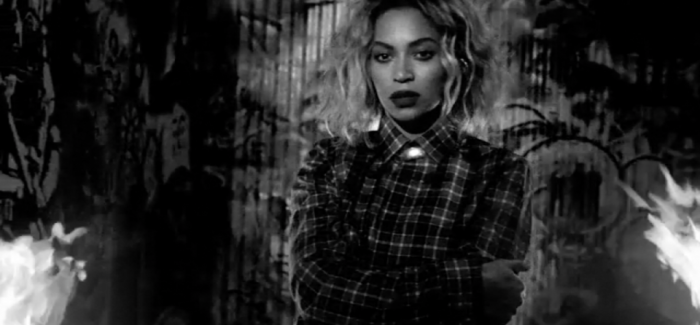
The current wave of Black feminist thought that has emerged as a result of Beyonce’s latest single, “Flawless,” has failed miserably to include commentary from women like Stud Phamous that reveal how queer women of color are cyclically challenging and reconfiguring ideas of love, power, sexuality, pain, struggle and liberation through performance art and expression. Beyonce heralds with pride and magnificent glory of how her: “Momma taught [her] good home training / [D]addy taught [her] how to love [her] haters / Sister taught [her she] should speak [her] mind/ [And her] man made [her] feel so God damn fine.” Inspiring for most women struggling in shaping their own womanhoods without depending upon others to choose the instrument of choice to carve it out with, there exists other women who simply do not identify with Beyonce’s anthem of the growing cult of “Bottom-Bitch Feminists.” And there are even more who are in total disagreement of following suit from mother dearest on practicing “home training,” and daddy’s lessons on “embracing haters.”
The problems and criticisms I have with Beyonce’s record is mostly her blatant misappropriation of author Chimamanda Ngozi Adichie’s lecture on feminism for young Black girls and their struggles to establish a functioning agency in understanding themselves as sexual and autonomous human beings. This reckless performance of sloppy feminism – practically white patriarchy in drag with red bottom Louboutins – can be seen as a form of sexual imperialism for profit, and blatant disregard for voices of queer folk of color in conversations that examine the limiting range of ideas on feminism in the Black LGBTQ community as well as their sentiments on such fault lined narratives.
Beyonce’s feminist falsehood of female empowerment, as well as dominant narratives of Black feminism and its consistent exclusion of the Black LGBTQ community has left very little room to interject concern where heteronormativity usually silences non-conforming gender folk.
We still have a whole generation living realities totally unaware of the missing narratives from grassroots movements that work to mobilize Black queer youth around issues dealing with gender-based violence, homelessness, sexual violence, repression, and scathing hate of women, transgender/sexual communities; not to mention the fight for proper representation in popular culture and media, adequate housing and living standards, reliable state assistance, access to healthcare and good food, education, living-wage jobs – just to name a few. Where are these voices?
Black America has totally compromised the well-being of their LGBTQ communities almost entirely to counter stop-and-frisk policies plaguing Black men, the mass-incarceration prison industrial complex stealing Black fathers, mothers, and viable care takers away from vulnerable homesteads, and against white fear and violence wielded against poor Black communities, all in the name of respectability politics. I would love for Ben Jealous or even Angela Davis to take a firm stance against all institutions of oppression that target all Brown and Black brothers and sisters, not just some Black men and women. And I’m going to need more critical commentary on homophobia and gender violence in Black America, in rap music and culture, in the imagery we project back onto White America’s IMAX screen in the form of internet browsers, painting pictures of self-hatred, disillusionment from bourgeoisie complexes, and exclusion of marginalized communities within the larger Black Diaspora.
Beyonce’s feminist falsehood of female empowerment, as well as dominant narratives of Black feminism and its consistent exclusion of the Black LGBTQ community has left very little room to interject concern where heteronormativity usually silences non-conforming gender folk. While this is a rather huge topic to tackle in a reasonably sized space, I would like to offer readers with a few rhetorical questions to leave with and carry around that may speak to any lingering and sagging thoughts the public might have while reckoning with this difficult subject matter:
Where is the place of LGBTQ folk of color in relation to issues in Black politics? Why should Black queer feminism matter in an era where all forms of racial violence and oppression are directed at everyone with Black and Brown skin? How does the role of sexuality influence the epistemologies of the heterosexuality of Black folk in understanding their collective and individual relationships with their LGBTQ brothers and sisters? How can we gauge different degrees of struggle in terms our own proximities to fear? Can there be more than one type of Black feminism? What kinds of realities are available for those who do not identify with the popular narratives of Black feminism, especially lesbian and non-gender conforming women of color?
About the Author:
Nancy Musinguzi is a hip-hop cultural critic and the Managing Editor of BlackCongolese.com, a NYC-based hip-hop and city lifestyle blog, that subscribes to developing and current underground movements and communities around the city that actively engage in art, film, music, minority empowerment, political solidarity, and transformative justice. Nancy is a freelance writer, photographer, spoken wordist, and political artist located in Long Island City, NY. A recent graduate from Rutgers University, she hopes to pursue an MFA in Directing and use film as a tool of social commentary and activism in the arts. She enjoys reading, writing provocative prose, watching movies, meeting new people, and seizing every opportunity to learn more about the world around her.
-
my thoughts on a few of your questions!

Where is the place of LGBTQ folk of color in relation to issues in Black politics?
i think there has been a lot of work done in this area, and of course, room for growth to be more inclusive with the lgbt community. essentially, it is my belief that there could be certain avenues inclusive of everyone no matter what their sexuality is and some where exclusivity would matter. but we need more voices and people like yourself to speak on issues that concern you. check out aisha and danielle moodie-mills — they are who i admire and they are doing great work in that area!
Can there be more than one type of Black feminism?
there has to be. there is more than one type of black “woman” — all whom have similar and not so similar experiences.
What kinds of realities are available for those who do not identify with the popular narratives of Black feminism, especially lesbian and non-gender conforming women of color?
i feel as though being black and lesbian IS in fact a popular feminist narrative. no? there is and have been incredible power there! the lgbt community is still discovering and working through non-gender conforming women of color. there needs to be a lot more conversation about this!
-
awesome informative piece!!
Submit a Comment


Recent Comments
- University of Houston Holds Candlelight Vigil for Britney Cosby and Crystal Jackson (1)
- { If I was there in my hometown Houston, Texas I would be there too. Rest in peace in the loving Jah } – Apr 01, 7:44 PM
- ELIXHER Chats With Queer Beauty Queen Djuan Trent (1)
 { Great article, Helen. I like that you and Djuan brought up the generational gap and the different stages of acceptance to coming out. Sometimes I... } – Mar 28, 6:17 AM
- Queering Black Feminism (2)
 { my thoughts on a few of your questions! Where is the place of LGBTQ folk of color in relation to issues in Black politics?... } – Mar 26, 7:51 PM
 { awesome informative piece!! } – Mar 25, 1:36 PM
- UPDATE: Father of Victim Arrested for Tampering with Evidence in Texas Lesbian Couple Case (4)
 { Emily, we're monitoring this story daily and will post any updates as soon as we're aware of further developments. } – Mar 26, 8:58 AM
- Older »




Comments