



What You Missed This Week 2.7.15: Atlanta #QWoC Murdered, #NBHAAD & More


We find the week’s top Black queer and trans women stories and more so you don’t have to.
Got a news item or commentary to add to our roundup? Post the link in the comments.
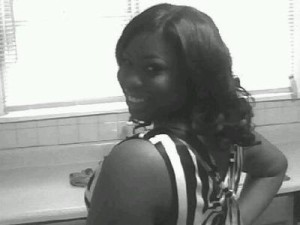
Ashley Belle
Atlanta Woman Charged With Murder of Domestic Partner
Atlanta police have arrested the domestic partner of a woman shot and killed last week, and charged her with murder.
The Atlanta Journal-Constitution reports that Ashley Belle, 22, was shot and killed around 3 p.m. on January 26 in a Southeast Atlanta apartment that she shared with Laura Bozeman.
Jail records obtained by The Advocate show Bozeman, also 22, is 170 pounds and 5’2”.
“The preliminary on scene investigation revealed that the victim and perpetrator are domestic partners and that they had been in verbal and physical altercations for the past two days,” Atlanta police spokesperson Kim Jones said in a statement sent to the local news media.
Continue reading on The Advocate.
Editor’s Note: Last week, ELIXHER reported on the murder of Candra Keels. Her death was also the result of Intimate Partner Violence — a sad reality in our community. We encourage our readers to read “I Was Not Exempt: Lesbians and Domestic Violence.”
The Significance of National Black HIV/AIDS Awareness Day
Now in its 15th year, National Black HIV/AIDS Awareness Day is meant to spark conversations within our community and promote education about the disease, but why? With observance days like National HIV Testing Day and World AIDS Day, why is it important to have a day dedicated to the Black population?
HIV and AIDS affect African Americans, more than any other racial or ethnic group in the United States. According to the CDC, 1 in 16 African American men and 1 in 32 African American women will be diagnosed with HIV in his or her lifetime. Despite advances in testing and protection, there continues to be more than 50,000 new HIV infections every year, with the majority, around 41 percent, belonging to African Americans.
More from Huffington Post.
Op-ed: Why Black Lives Should Matter to All LGBT People
Earlier this month, a group of queer and trans people of color disrupted two bars in the Castro District of San Francisco to deliver a message of mourning.
“We need you in the streets with us,” we chanted, holding up images of black queer and trans people killed by police or vigilantes. “We honor the lives of murdered black trans women and queers.”
The response? The DJ of Toad Hall spewed verbal abuse, gave us the finger, and cranked up the music to drown out our words. A white bar patron pulled the hair of a protester and shattered a glass bottle at her feet. Then he threw a large trashcan at our group, injuring three protesters. We, a group of queer and trans activists of color, had entered the space peacefully to invite the predominantly white clientele of Toad Hall to join us in mourning the killings of black queer and trans people. In response, we were met with hostility and violence.
More from The Advocate.

Bi activist Faith Cheltenham
Uncovering the ‘B’ in LGBT: Bisexuals Say Invisibility Leads to Many Social, Health Disparities
When President Barack Obama uttered those three words at this year’s State of the Union address—lesbian, bisexual, and transgender—it was another milestone for LBT activists across the nation fighting for visibility in a minority world still dominated heavily by white gay men.
“…That’s why we defend free speech, and advocate for political prisoners, and condemn the persecution of women, or religious minorities, or people who are lesbian, gay, bisexual or transgender. We do these things not only because they’re right, but because they make us safer,” Obama said in his Jan. 20 speech.
Never before had the words “lesbian,” “bisexual” or “transgender” crossed the lips of a president giving a speech watched by so many across the nation.
“The president mentioning bisexuals in the State of the Union, it was great, a milestone. I know many bisexual activists and organizers were talking about it in the days after it happened,” says Dr. Sharif Williams, better known as Dr. Herukhuti. “It’s a milestone in the ongoing work that we have been doing.”
Read more over at The GA Voice.
100+ LGBTQ Black Women You Should Know: The Epic Black History Month Megapost
Black lesbian, gay, bisexual, queer and transgender women represent a vibrant and visible portion of the LGBTQ community. In addition to the legends of the Harlem Renaissance and the decades of groundbreaking activism spearheaded by women like Audre Lorde, Barbara Smith and Angela Davis, many of the most prominent coming out stories of the past two years have been black women like Brittney Griner, Raven-Symonè, Diana King and Robin Roberts. Meanwhile, Laverne Cox and Janet Mock have become the most visible transgender women in media.
So, in honor of Black History Month, below you’ll find over 100 lesbian, bisexual, gay, queer and transgender women you should know about.
Check out Autostraddle’s round-up here, including their #TeamELIXHER mention!
-
February 9, 2015
Our Buzz 2.8.15: #EMPIRE Lesbian Plot, Angel Haze & More
February 8, 2015


Recent Comments
- Four Things My Exes Taught Me (1)
 { Beautiful Cairo! I learned some of the same things from my exes. You're making me want to write my own essay. I learned a lot... } – Feb 09, 12:32 PM
- ELIXHER Valentine's Day Giveaway: Win Double Dozen From #PassionRoses (17)
 { Roses are red, Wine can be too, Poetry is hard sometimes, Wine. #PassionRoses } – Feb 09, 9:59 AM
- { Roses are red, My bank balance has me blue, I need to win these flowers, To send to my boo. #PassionFlowers } – Feb 06, 9:22 AM
 { #PassionRoses } – Feb 04, 5:33 PM
- { Roses are red Violets are blue True love is rare, Which makes us the perfect pair } – Feb 04, 5:23 PM
- Older »





Submit a Comment